Trusted Canadian Immigration Lawyers
Most people fill out IMM 5562 in ten minutes and never think about it again. That’s the problem. This form asks for ten years of travel history, and Immigration, Refugees and Citizenship Canada checks it against your actual passport stamps. A missing trip isn’t a typo to them. It’s a discrepancy, and discrepancies get flagged.
This guide walks through exactly what IMM 5562 asks for, who needs to fill it out, and how to avoid the mistakes that turn a routine form into a five-year setback.
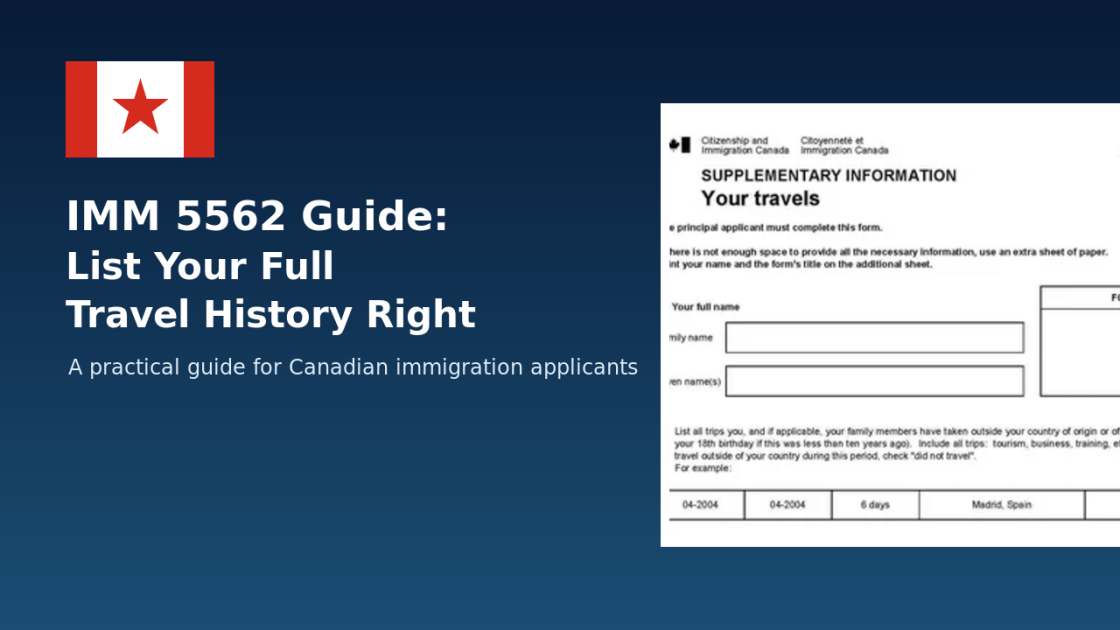
IMM 5562, officially called Supplementary Information: Your Travels, is used to provide travel-history information as part of certain Canadian immigration applications. Depending on the programme and application process, applicants may complete the travel section through the Permanent Residence Portal or use a standalone PDF.
The form asks for details such as the countries visited, dates of travel, and the purpose of each trip. Before completing it, check the current instructions for your specific immigration programme to confirm which version applies to you.
The principal applicant is not necessarily the only person whose travel history must be reported. Where the form requires it, travel information may also need to be provided for:
Names should also be entered exactly as they appear on the relevant official documents. Avoid replacing full names with initials, abbreviations, or nicknames.
The travel-history section should be approached broadly rather than selectively. Applicants should follow the reporting period and instructions applicable to their application rather than deciding that certain trips are too insignificant to mention.
A trip does not necessarily become irrelevant because it lasted only a few days or was undertaken for work. Business travel, conferences, training, holidays, family visits, and other qualifying trips may all need to be included.
Short journeys across an international border can also form part of your travel history. Do not exclude a trip simply because you returned home the same day or stayed away for only a weekend.
If you genuinely had no travel to report during the required period, follow the form’s instructions for indicating that you “did not travel.” Do not leave a required section blank simply because there is no information to enter.
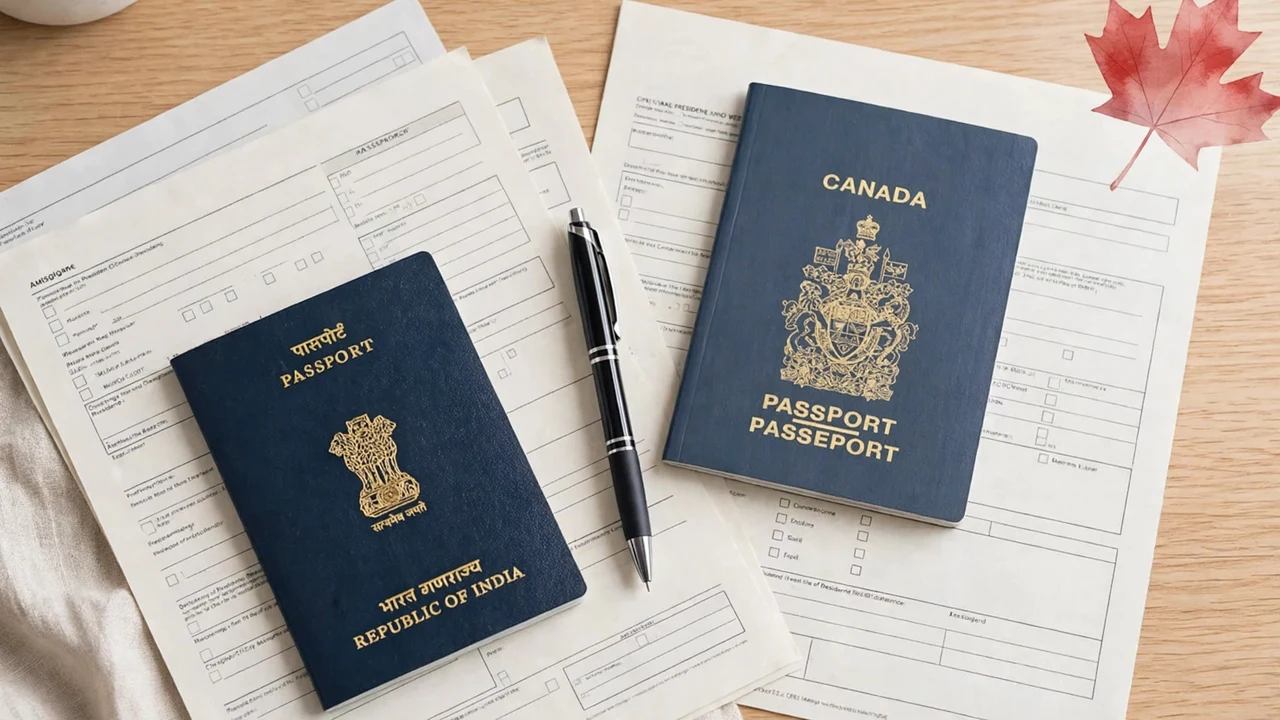
Consider a fictional applicant preparing a permanent residence application. They have two passports: one used mainly for personal travel and another used for work.
While completing their travel history, the applicant remembers their family holidays and personal trips but leaves out several business journeys recorded in the second passport. They assume those trips are irrelevant because they were undertaken for employment rather than personal reasons.
During the processing of the application, the applicant is asked for additional passport information. The second passport reveals numerous trips that were not included in the original travel history. The applicant is then asked to explain the difference and submits an updated list containing many more journeys than originally declared.
The problem is not simply the number of trips. The larger concern is the inconsistency between the information provided in the application and the travel records available to immigration authorities.
The example highlights an important principle: do not decide for yourself that a qualifying trip is too short, too routine, or too work-related to report. Review all relevant passports and records before submitting the form.
An incomplete or inaccurate immigration application can have consequences beyond a simple request for clarification. Under Section 40 of the Immigration and Refugee Protection Act, certain forms of misrepresentation or withholding of material information can result in inadmissibility.
Section 40 addresses direct or indirect misrepresentation and the withholding of material facts that could induce an error in the administration of Canadian immigration law.
Not every mistake automatically amounts to misrepresentation. However, applicants should take discrepancies seriously, particularly where information was knowingly omitted or where the missing information could affect the assessment of the application.
A finding of inadmissibility for misrepresentation can lead to a five-year period during which the person may be barred from applying for permanent residence. The applicable starting point depends on the circumstances and where the determination is made.
Because the consequences can be significant, applicants should address genuine uncertainties before submitting an application rather than assuming an omission will simply be corrected later.
Using a representative or receiving help with your forms does not remove the applicant’s responsibility for the information submitted. Review the completed application carefully and ensure the travel history accurately reflects your circumstances.
Follow these steps carefully to provide complete and consistent travel history information on IMM 5562:
Check your programme’s instruction guide to determine whether you need the Permanent Residence Portal version or the paper PDF. Using the correct version helps prevent unnecessary processing issues.
Write each person’s full given name and family name exactly as shown on their official documents. Avoid using shortened names, nicknames, or initials.
Gather every passport you have held during the required reporting period, including expired passports and second, service, or diplomatic passports. Review each passport carefully for stamps, visas, and travel dates.
List every trip taken during the past 10 years, or since turning 18 if that period is shorter. Include business trips, training, holidays, tourism, and other travel, even if the trip was brief.
Complete the required travel history for your spouse or common-law partner and dependent children aged 18 or older, regardless of whether they are accompanying you to Canada.
If someone did not leave their home country during the reporting period, select “did not travel” rather than leaving the relevant section blank.
If you need more space, add extra rows to include all required travel details. For the digital form, use the plus button where available. For a paper application, print another copy of the relevant page, complete it, and attach it with your name and form title clearly written at the top.
“I don’t remember” isn’t an entry the form accepts, but guessing at dates you’re unsure of isn’t the answer either. Start with your passport stamps and visas, since they’re the most reliable record you have. From there, boarding passes, airline account histories, old email confirmations, and your home country’s entry and exit records can fill in the gaps.
If, after a genuine effort, a date remains approximate, note that limitation in a letter of explanation rather than presenting your best guess as a confirmed fact. IRCC’s published instructions for IMM 5562 don’t outline a specific process for uncertain travel dates, so it’s worth checking your program’s current instruction guide before deciding how to handle it.
Not necessarily! The requirement depends on the specific immigration programme and application instructions. If IMM 5562 or its travel-information section is included in your application requirements, complete it according to the applicable instructions.
Use the form’s available option to add additional rows where applicable. For paper applications, follow the instructions for providing additional pages and clearly identify the continuation pages.
Where the application instructions require it, yes. The travel history may need to cover your spouse or common-law partner even if they are not accompanying you to Canada.
If the trip falls within the reporting requirements, do not exclude it simply because it was short or business-related. The purpose or duration of a trip does not, by itself, make it irrelevant.
The consequences depend on the circumstances, including the nature and significance of the omitted information and whether it amounts to misrepresentation. If you discover an error, do not ignore it. Consider correcting the information and obtaining appropriate professional advice where necessary.
If completing IMM 5562 has made you question whether your travel history is complete, that is worth addressing before submitting your application. A focused review can help identify missing trips, inconsistencies between passports and forms, or other details that may need clarification.
Ansari Immigration Law provides consultations for applicants who want professional guidance on their immigration documentation and travel history before filing.