Trusted Canadian Immigration Lawyers
Your permanent resident card is more than a piece of plastic. It is the document that lets you board a flight back to Canada, prove your status, and get on with your life here. When it expires or gets lost, knowing exactly what to do and in what order saves you weeks of stress.
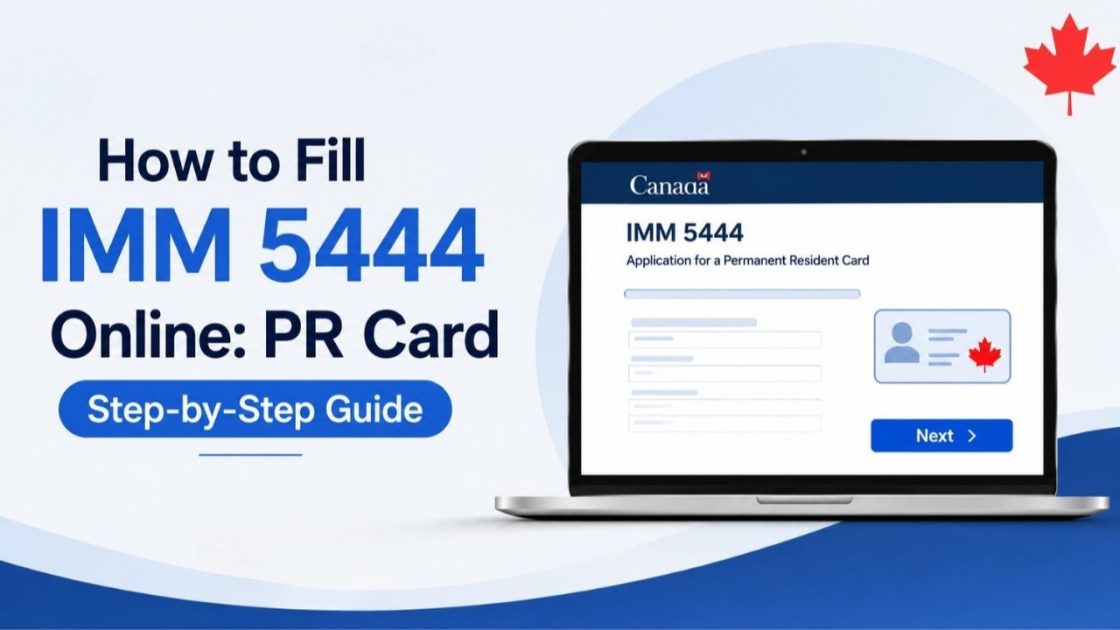
The IMM 5444 is the form at the centre of every PR card application, whether you are renewing, replacing, or applying for the first time. At Ansari Immigration Law, we walk clients through this process regularly, and the details below reflect what actually matters when you sit down to complete it.
Before anything else, confirm that this form applies to your situation. You use IMM 5444 if you are:
If your card still has more than nine months (270 days) of validity left, IRCC will return your renewal application without processing it—unless your name or gender has changed.
You must be physically inside Canada to submit IMM 5444. If you are outside Canada without a valid PR card, this is not the correct form. You would need to apply for a Permanent Resident Travel Document (PRTD) through a Visa Application Centre.
IRCC checks several things before issuing a PR card. You must:
If you think you might be eligible for Canadian citizenship, check before applying for a PR card renewal. IRCC will not issue a PR card to a Canadian citizen, and while your application fee gets refunded in that case, it still costs you time.
This is where a lot of applicants run into trouble. If you have held PR status for five years or more, you must show at least 730 days of physical presence in Canada within the five years immediately before your application date. That works out to roughly two out of every five years.
If you have held PR status for less than five years, you must show that you are on track to reach 730 days within five years of your landing date.
Working abroad for a Canadian business. If your employer is a Canadian corporation or government body and you were assigned outside Canada as a condition of your employment, those days count. You will need a signed letter from your employer confirming the nature of the assignment, your role, and that you will return to work in Canada after the assignment ends.
Accompanying a Canadian citizen spouse, common-law partner, or parent. Days you spent outside Canada with a Canadian citizen in one of these relationships count toward your residency total. You will need proof of their citizenship, proof of your relationship, and all passports used during that period.
Accompanying a permanent resident spouse, common-law partner, or parent who was working for a Canadian business. Similar rules apply, but the person you accompanied also needs to meet their own residency obligation and must have been employed full-time by a Canadian business or public service while abroad.
If you cannot meet the 730-day requirement, IRCC may still consider your case on humanitarian and compassionate grounds based on your circumstances.
Getting your documents in order before you open the portal will make the actual form much faster to complete. Required for everyone:
Your existing PR card: If renewing, include a copy of your current card. If replacing a damaged card, destroy it immediately and upload a photo of the destroyed card as supporting evidence. If your card was lost or stolen, include a copy of a police report if you have one.
For applicants under 18: You will also need a copy of your birth certificate and, if applicable, legal guardianship documentation or school records.
If your name has changed: You need legal documentation proving the name change (a marriage certificate, court order, change of name document, or equivalent), plus a provincial ID in your new name. If the name change happened outside Canada, a foreign passport or official document linking your old and new names is required.
If documents are in a language other than English or French: Include a certified translation and, if the translator is not a Canadian certified translator, an affidavit from them confirming their language proficiency and the accuracy of the translation.
Go to the IRCC Permanent Residence Online Application Portal. You will need a valid email address and an account to proceed. If you have an existing IRCC secure account, this is a separate login for the PR portal specifically.
Select the PR card application type. The portal will ask you to confirm basic eligibility questions before generating your form.
The form covers several sections. Do not leave any blank. If a section does not apply to you, type “Not Applicable” or “NA.” Leaving sections empty will get your application returned.
Personal information: Your full legal name must match exactly what appears on your passport. This matters because you will use your full name to digitally sign the application at the end, and IRCC checks for consistency.
Status and history: You will confirm your PR status, your client ID (found on your Confirmation of Permanent Residence or your existing PR card), and your immigration history.
Time spent outside Canada: This is the section that trips up most applicants. You must list every absence from Canada over the past five years. The portal provides a table format for this. Be precise with dates. If you spent fewer than 1,095 days outside Canada, the supporting residency documents are technically optional but still advisable to include. If you spent more than 1,095 days outside Canada, supporting documents are essential.
Reason for application: Select the appropriate reason: first card, renewal, replacement (lost/stolen/damaged), name change, or gender designation change.
Urgency request: If you need your card within three months due to serious illness, a family member’s illness or death, employment reasons, or a crisis situation, check the urgent processing box. You must upload proof: travel tickets or itinerary, proof of payment for travel, a letter explaining the urgency, and supporting documentation such as a doctor’s note or employer letter.
The portal has a dropdown menu for each document type. Upload your photo under “Photo (front)” and “Photo (back).” Upload your passport under “Passport or Other Primary ID Document.” Upload your residency evidence under the appropriate categories.
Make sure your uploads are clear and legible. Blurry or incomplete scans will get your application returned.
The processing fee is CAD $50 per person. If biometrics are required (see the note below), that adds CAD $85 per person, or CAD $170 for a family of two or more applying together.
Payment is online only. IRCC will not accept cheques, money orders, or any other form of payment for this application. Once you pay, download and save your receipt. You will upload it as part of your application.
Do you need biometrics? Most PR card applicants do not. The exception: if you were under 14 when IRCC received your permanent residence application (filed on or after July 31, 2018, or December 31, 2018 depending on your country), and you are now 14 or older, you will need to give biometrics. After you submit, IRCC will send a Biometric Instructions Letter directing you to a collection service point.
Read the declaration carefully. You must type your full name exactly as it appears on your passport to digitally sign. After you click submit, you cannot go back and change anything, so review every section before completing this step.
If you have appointed an immigration representative, they can fill out and upload documents on your behalf through their own portal account, but you must be the one to type your name and click submit. The digital signature must belong to you.
IRCC will send an Acknowledgement of Receipt (AoR) to the email address on your application once it is under review.
If everything is in order, your card will arrive by mail or IRCC will contact you to arrange pickup. If you applied for urgent processing, note that IRCC cannot guarantee delivery in under three weeks regardless of circumstances.
If your application is incomplete, it will be returned to you with a note explaining what is missing. If it is refused, you will receive a refusal letter outlining the reasons.
Once you receive your new PR card, destroy your old one right away. Your existing card stops being valid 60 days after IRCC issues the new one. If you travel outside Canada after applying but before receiving your new card, and your new card is issued while you are abroad, you will not be able to use your old card to return. You would need to apply for a PRTD instead.
If you are planning international travel soon after applying for a renewal, check IRCC’s current processing times before you book. A new PR card application triggers a 60-day countdown on your existing card from the issue date of the new one. That clock runs whether or not your new card has reached you yet.
If your travel plans are already set and you are unlikely to receive the new card in time, speak to an immigration lawyer before you leave. The options and risks differ depending on your specific timeline.
If you cannot apply online, you can mail a paper application. Send your completed IMM 5444, the Document Checklist (IMM 5644), and all supporting documents to:
Use a tracked mailing service. If your application gets lost in transit and you have no proof of delivery, IRCC cannot help you.
Before you book your flight, ensure your PR card application is accurate and complete. A refusal or return can cost valuable time, money, and delay important travel or personal plans. If your residency history is complex or documents are unclear, a legal review is essential before submission.
Ansari Immigration Law assists with PR card applications and all Canadian immigration matters. Book a consultation today for expert review and avoid unnecessary delays.
IMM 5444 is the official form used by permanent residents in Canada to apply for a new PR card, renew an existing one, or request a replacement. It helps IRCC verify identity, residency history, and eligibility before issuing a valid travel document.
No, IMM 5444 must be submitted while you are physically inside Canada. If you are abroad without a valid PR card, you generally need to apply for a Permanent Resident Travel Document (PRTD) before returning.
Ansari Immigration Law provides expert guidance for IMM 5444 applications, helping clients avoid errors, meet residency requirements, and submit complete documentation. Their professional review reduces delays and improves the chances of smooth PR card approval.
If required information or documents are missing, IRCC will return your application without processing it. This can delay your PR card issuance significantly, so accuracy and proper document submission are essential before applying.
Filling out IMM 5444 online is straightforward when you have the right documents ready and understand what IRCC is actually looking for. The residency calculation, the photo requirements, the travel history table, and the digital signature rules are where most mistakes happen. Get those right, and your application has a strong chance of moving through without delays.
If anything in your situation is complicated, whether that is extended time abroad, a name change with documents from multiple countries, or a tight travel deadline, do not guess. The cost of professional advice is almost always lower than the cost of a returned application and a missed deadline.