Trusted Canadian Immigration Lawyers
Canada has always positioned itself as a country that welcomes immigrants. But in 2025, the federal government made a significant shift in that direction. The introduction of Bill C-2, formally called the Strong Borders Act, signals one of the most substantial tightening of immigration rules Canada has seen in years. For anyone planning to move to Canada, currently studying there, or working toward permanent residence, this legislation is not something to scroll past.
This guide breaks down what Bill C-2 actually does, who it affects most, and what it means for the decisions you are facing right now. Ansari Immigration Law has put this together to help you make sense of the changes before they affect your plans.
Bill C-2, the Strong Borders Act, was tabled in Parliament in early 2025 under the Carney government. It was introduced against a backdrop of mounting political pressure to reduce overall immigration numbers and tighten control over who enters and stays in Canada.
The Canadian government had already made several administrative changes to immigration programs in 2023 and 2024, including caps on international student permits and reductions to temporary foreign worker pathways. Bill C-2 takes many of those policy intentions and writes them into law, giving them a firmer legal foundation and making them harder to reverse through policy updates alone.
The bill covers a wide range of areas, including asylum processes, border enforcement, and changes to how certain temporary residents can transition to permanent status. It also gives the government broader authority to act quickly in response to what it defines as irregular migration.
The legislation touches several parts of the immigration system. Below are the areas that will affect the most people.
One of the most discussed provisions in Bill C-2 relates to asylum seekers. The bill expands the list of countries considered safe for return, which means claimants from those countries will face faster processing and a higher bar for having their claims accepted. The legislation also introduces new procedural timelines designed to speed up the overall asylum process, which critics argue may reduce the time claimants have to gather evidence and legal support.
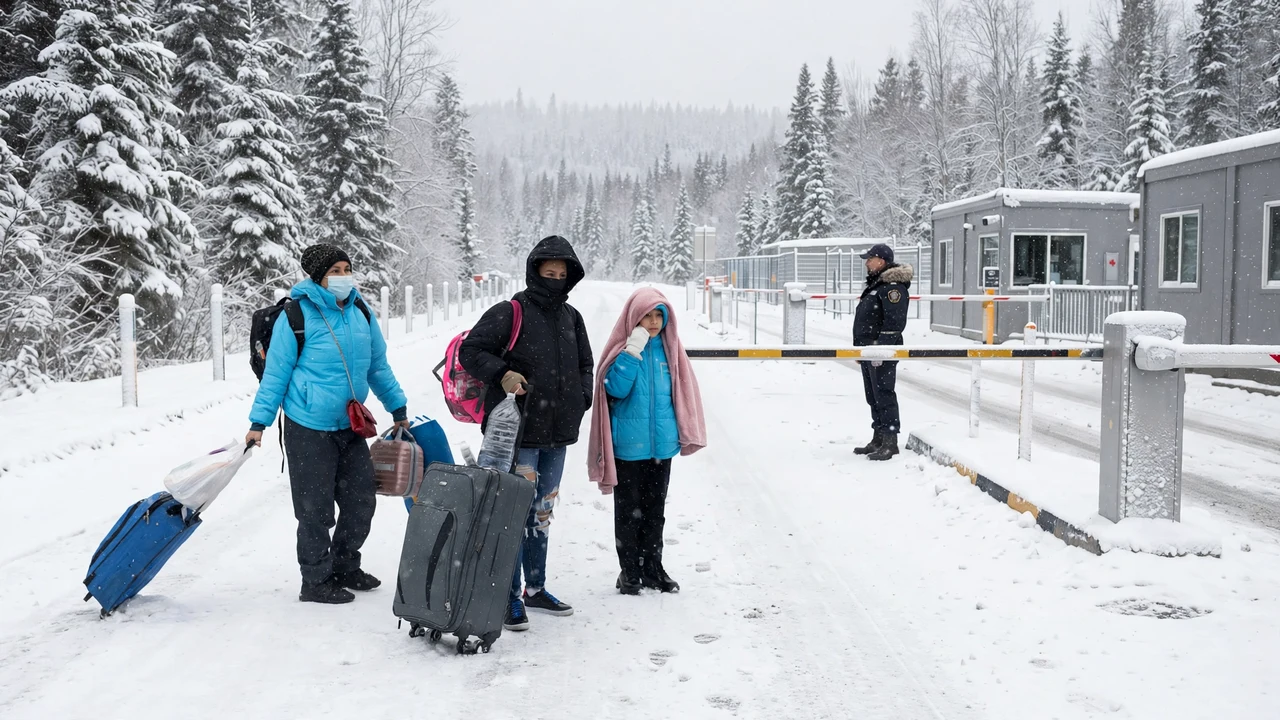
The government has proposed giving border officials wider authority to turn back individuals who cross into Canada at irregular points of entry. This is a direct response to years of political debate over crossings at locations like Roxham Road. The bill formalizes a stricter approach and gives enforcement agencies clearer legal backing for those decisions.
For people already in Canada on temporary permits, Bill C-2 introduces tighter conditions around status extensions and transitions to other categories. The message from the government is that temporary residence is exactly that, temporary. People who entered under programs that were expanded during the pandemic era or during periods of higher immigration targets may find that those pathways have narrowed considerably.
International students represent one of the largest groups of temporary residents in Canada, and Bill C-2 does not ignore them. The changes come on top of already significant shifts that took place in 2024 and early 2025, including stricter rules around who qualifies for a Post-Graduation Work Permit (PGWP).
Since 2024, graduates of programs below the bachelor’s level have been required to show that their field of study connects to occupations facing long-term labour shortages in Canada. This field-of-study requirement does not apply to those who complete a bachelor’s, master’s, or doctoral degree, but it has created real uncertainty for college graduates and certificate holders.
Adding to that uncertainty was an announcement in January 2026 that the government would not be updating its current list of PGWP-eligible programs for the rest of the year. The list, which currently includes 1,107 programs across sectors like healthcare, trades, agriculture, STEM, and transport, is frozen until at least the end of 2026.
This follows a period of significant changes in 2025 when 119 programs were added and 178 were initially removed before the government paused those removals.
For prospective students deciding whether a Canadian college program is the right move, the frozen list does provide some short-term certainty. The program you enroll in today will remain in the same eligibility position it holds now, at least through the end of the year.
That said, students in non-degree programs should still carefully check the official list of Classification of Instructional Programs (CIP) codes before applying for a study permit or submitting a PGWP application.
Bill C-2 does not eliminate pathways to permanent residence, but it does signal a government that is willing to change the rules faster and with less notice than applicants might have counted on in previous years.
Programs like Express Entry have already seen their selection criteria shift repeatedly based on labour market priorities. The Strong Borders Act reinforces the message that the government wants to retain control over how many people can use each pathway and under what conditions. For anyone who has been building a PR strategy around a specific program or score threshold, it is worth revisiting that plan with someone who follows these changes closely.
Provincial Nominee Programs may also feel pressure as the federal government looks at aligning nomination numbers more tightly with national targets. If federal caps on permanent resident admissions tighten further, provinces may see their allocation shrink accordingly.
Bill C-2 does not make dramatic direct changes to spousal sponsorship on its face, but the broader cultural and legal shift it represents is worth noting. Processing times for spousal applications have already been a persistent problem, and any legislation that increases the administrative burden on IRCC across the board could affect how resources are distributed across program lines.
Applicants in the spousal sponsorship stream should continue to prepare complete and well documented applications. Missing documents or errors that might have been overlooked in a faster processing environment carry more risk when adjudicators are working through larger backlogs.
Immigration law moves fast. The window between a policy announcement and its real world effect on your application can be very short.
Immigration decisions get harder when the rules keep shifting. Missing one change can set your plans back by months or longer. If you are not sure whether Bill C-2 affects your current application, your study plans, or your route to permanent residence, get a proper assessment before you act.
Ansari Immigration Law works through exactly these questions with clients every day. Book a consultation and get a clear picture of where your file stands under the current rules.
Not directly! Bill C-2 primarily targets how people enter Canada, how asylum claims are processed, and how temporary residents can extend or change their status. If you already hold permanent residency, your status is not affected by this legislation. Where it may indirectly matter is if you are sponsoring a family member from abroad, since processing backlogs and policy shifts can affect wait times on those applications.
The eligibility that matters is the one in effect when you submit your PGWP application, not when you enrolled. The good news is that the list is frozen for all of 2026, so no programs will be removed this year. However, the list can be revised after that, and there is no guarantee a program that qualifies today will qualify in 2027 or beyond. If your graduation date falls in 2027 or later, it is worth monitoring IRCC updates as that date approaches.
Yes, you can still create a profile and sit in the pool. CRS cutoff scores change with every draw, and they can move significantly depending on which occupations or provinces are being prioritised. A score that looks too low today may become competitive if the government runs a targeted draw for your occupation or if overall pool numbers shift. The best approach is to keep your profile current and accurate while working on factors that could raise your score, such as a provincial nomination or an additional language test.
Bill C-2 does not specifically redesign the spousal sponsorship stream. However, any legislation that increases administrative activity at IRCC can indirectly affect how quickly different application types are processed. Currently, spousal sponsorship timelines vary significantly depending on whether the sponsored person is inside or outside Canada. A complete, well prepared application remains the most effective way to avoid unnecessary delays regardless of broader policy shifts.
Yameena Ansari and the team at Ansari Immigration Law follow federal legislative updates, IRCC policy notices, and regulatory changes as part of their daily practice. When something like Bill C-2 passes or a major program rule changes, the firm reviews how those updates affect active client files and adjusts strategies accordingly. Clients do not have to track the news themselves. That is what having a licensed representative is for.
Bill C-2 reflects a government that has decided tighter controls serve the public interest, at least for now. That position may shift with future elections or economic pressures, but it is the reality applicants are working within today.
The good news is that pathways to Canada still exist. The PGWP remains available for graduates in eligible programs. Express Entry is still running. Family sponsorship is still an option. What has changed is the margin for error. Applications that are incomplete, filed under the wrong program, or built on outdated assumptions are far more likely to fail in this environment than they were a few years ago.
Get your information from current, reliable sources. Check IRCC directly for the programs list and policy updates. And if your situation is at all complicated, get professional advice before you commit to a course of action.