Trusted Canadian Immigration Lawyers
Are you trying to check a Canadian immigration application but unsure whether IRCC needs your UCI or application number? These identifiers serve different purposes. Entering the wrong one can prevent you from accessing the correct record or completing a form accurately.
Your Unique Client Identifier (UCI), also called a client ID, identifies you across your dealings with Immigration, Refugees and Citizenship Canada (IRCC). An application number, sometimes called a file number, relates to one specific application. Ansari Immigration Law explains how to locate each number, understand its format, and use the correct details when checking your immigration file.
Knowing the difference is useful whether you have applied for permanent residence, a study permit, a work permit, or Canadian citizenship.
A Unique Client Identifier (UCI) is a personal identification number assigned by IRCC to identify you in its records. It is also known as a client ID. Unlike an application number, your UCI generally stays the same across different immigration applications. A UCI typically appears in one of these formats:
Check your previous IRCC correspondence and immigration documents. Your UCI may appear on:
You can also consult the Canadian government’s official guidance on locating your UCI or client ID. What if you are applying for the first time? If you have never applied to IRCC before, you may not have a UCI yet. Follow the instructions on the relevant form.
IRCC advises first-time applicants to enter “N/A” or “Not Applicable” when permitted. If an online form does not accept this entry, leave the field blank. Do not create your own number or use another person’s UCI to complete your application.
An IRCC application number identifies a specific application that the department has begun processing. People often call it a file number because it helps IRCC identify and track an individual case.
Unlike your UCI, your application number changes when you submit a separate application. For example, you may use the same UCI for a work permit and a permanent residence application, but each application has its own reference number.
IRCC application numbers usually contain one letter followed by nine digits. Examples include:
These examples illustrate the usual format. Always copy the number assigned to your own application.
Look for your application number in:
IRCC generally provides the number when it starts processing your application. An automatic email confirming online submission is not necessarily your AOR. IRCC first needs to check that your application is complete.
If you have not received an AOR, check the instructions for your application type before assuming that your file number is missing. You can read the government’s official explanation of application numbers.
Although both numbers help IRCC identify your records, they are not interchangeable.
|
Feature |
UCI or Client ID |
Application Number |
|
Purpose |
Identifies you as a client |
Identifies a specific application |
|
Typical Format |
8 or 10 digits |
1 letter followed by 9 digits |
|
Stays the Same? |
Generally remains the same |
Different for separate applications |
|
Where to Find It |
IRCC letters, PR cards, permits |
AOR letters, correspondence, online account |
|
When Assigned |
When IRCC creates your client record |
When IRCC starts processing the application |
For applicants preparing a permanent residence submission, Canada permanent residency services can provide relevant information about the application process. Keeping your UCI, application number, previous correspondence, and submitted documents organised also makes it easier to respond to requests from IRCC.
Remember that a study permit’s document number is another distinct identifier. It refers to the permit document itself, not your personal UCI or a separate application. Read the related guide, How to Find Your Canadian Study Permit Document Number, to understand the difference.
Once you have the required identification details, use the official status service that matches your application type and submission method. Follow these steps:
Some application status tools require only a UCI or application number, while others require both. The requirements also differ by application category.
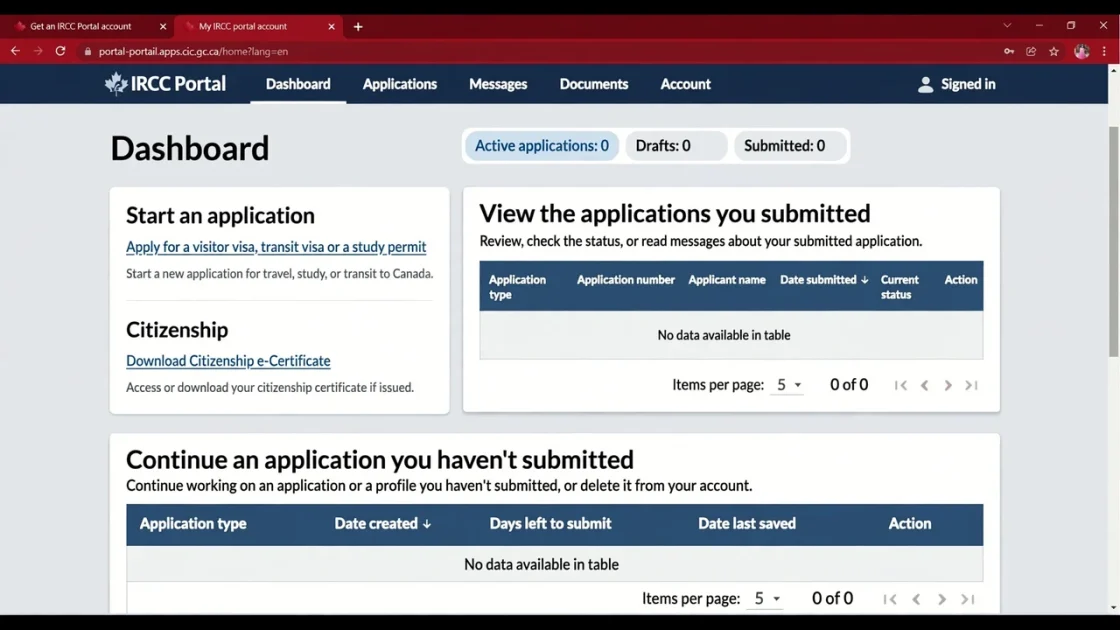
If you have applied online, check the account you used to submit your application. You may need a separate IRCC account to link an existing application or access a dedicated status tracker.
A few simple checks can help you prevent confusion when dealing with your IRCC file.
If your application does not appear in an online tool, review the eligibility requirements for that tool and confirm that you have entered the correct details before taking further action.
No! A UCI identifies you as an individual in IRCC’s records and generally stays the same across applications. An application number identifies a specific file and differs for separate applications.
Depending on the application type and status service, you may be able to use your application number instead. Other services, including certain application trackers, require both identifiers. Check the relevant instructions on the official IRCC application status page.
Review previous IRCC letters, your AOR, immigration permits, and your online account. If you still cannot locate the required number, consult the relevant IRCC Help Centre guidance or contact the appropriate IRCC office using its official instructions. Do not guess the number when completing a form.
Yes! Ansari Immigration Law can help you understand the difference between immigration identifiers and review questions about your application documents. The appropriate next steps depend on your application type, correspondence, and individual circumstances.
If you cannot locate your UCI, have difficulty identifying your application number, or need help understanding an IRCC request, Ansari Immigration Law can provide guidance relevant to your circumstances.
The team can help you review immigration paperwork, understand the next steps, and identify questions that may require legal advice. Keeping your records accurate can make communication with IRCC easier.