Trusted Canadian Immigration Lawyers
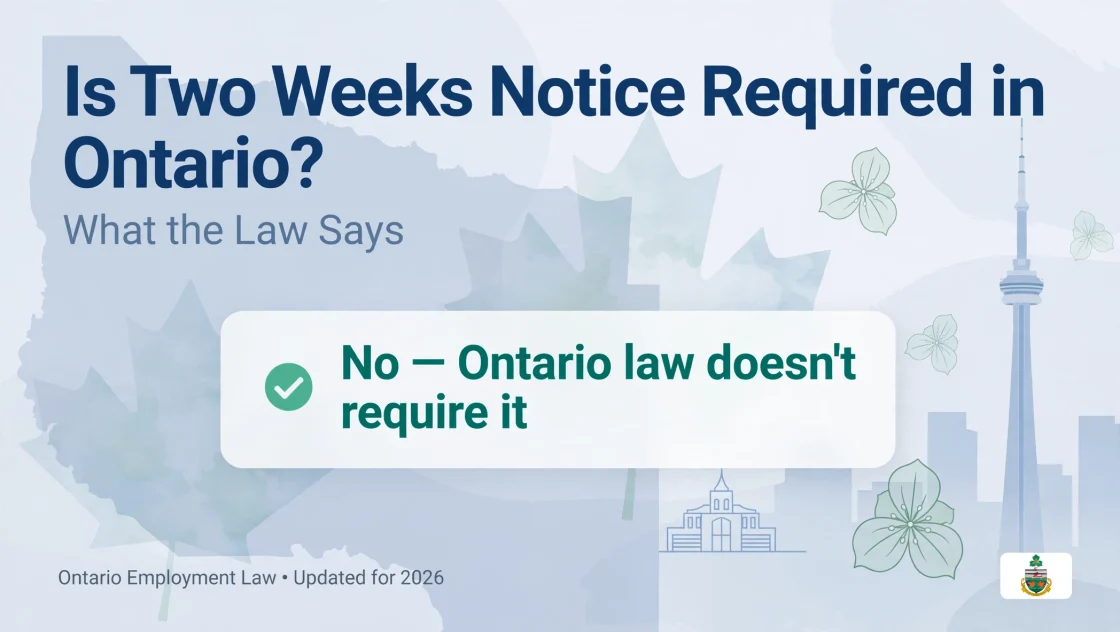
If you are planning to leave your job in Ontario, you may have heard that you must give your employer two weeks notice. This is a common workplace practice, but it is not generally a requirement under Ontario’s Employment Standards Act, 2000.
The important distinction is between provincial employment standards, the terms of your employment contract and common law principles. These can affect what notice may be expected in your particular situation. The Ontario government generally does not impose a standard two week resignation period on employees. There are limited exceptions, including certain situations involving mass termination.
Before resigning, it is worth checking your employment agreement and understanding what could happen if you leave earlier than expected. Ansari Immigration Law can help people understand legal issues that may affect their work and immigration circumstances.
Generally, no! An employee in Ontario does not normally have to give two weeks notice simply because they want to resign. The Employment Standards Act sets out rules for employers when they terminate employees. It does not create a general rule requiring employees to provide two weeks notice when they voluntarily resign.
There is one important situation to be aware of. If an employee has received termination notice as part of a mass termination, the ESA can require written notice before the employee leaves during that statutory notice period. The required period can be one week or two weeks depending on the employee’s length of service. So, the statement that everyone in Ontario must provide two weeks notice is too broad.
Two weeks notice is widely used because it gives an employer time to prepare for an employee’s departure. It may allow the employer to redistribute duties, arrange a replacement or complete a transition. It can also help preserve a professional relationship with the employer. However, workplace custom and legal obligation are not necessarily the same thing.
An employee may choose to provide two weeks notice even when the law does not require it. Whether that is appropriate depends on the contract, circumstances and nature of the position.
The ESA primarily establishes minimum employment standards. Its termination provisions focus on obligations that apply when an employer ends employment. For example, qualifying employees may be entitled to statutory termination notice or termination pay when an employer ends the employment relationship. That should not be confused with an employee’s decision to resign.
A resignation is normally initiated by the employee. The question then becomes whether another legal source, such as an employment agreement or common law, creates an obligation to provide notice. This distinction is important because statutory minimum standards do not answer every employment law question.
Outside the specific statutory rules, common law principles may be relevant to the notice an employee should provide before leaving. Reasonable notice is not automatically two weeks. The appropriate period can depend on the circumstances of the employment relationship.
For example, a senior executive with significant responsibilities, specialised knowledge and a long employment history may raise different considerations from someone in a junior position who has worked for an employer for a short period. Factors that may matter include:
There is no single formula that determines reasonable notice in every Ontario workplace.
It can contain a resignation notice provision that requires more than two weeks, but whether that provision is legally enforceable depends on the wording of the agreement and the surrounding circumstances.
For example, an employment agreement might state that an employee must provide four weeks written notice before resigning. That does not automatically mean the provision will be enforceable in every situation.
Employees should therefore read the actual agreement instead of assuming that workplace custom determines their obligations. If the contract contains complicated termination or resignation language, obtaining legal advice before giving notice can help clarify the potential consequences.
Leaving immediately does not automatically mean that an employer can deduct money from your final pay or impose a penalty. However, if an employee has a legally enforceable obligation to provide notice and leaves without doing so, the employer may potentially have a claim for damages.
A damages claim generally depends on the actual circumstances and losses involved. The employer would need to establish a legal basis for the claim rather than simply pointing to the fact that the employee did not provide two weeks notice. This is one reason resignation disputes involving alleged wrongful resignation are relatively uncommon and highly dependent on the facts.
Potentially, yes, but this is not the same as saying an employer automatically receives compensation whenever someone quits without notice. The circumstances can include the employee’s position, contractual terms, length of service, responsibilities and the effect of the departure.
A specialised employee who handles critical responsibilities may create different practical concerns than someone whose duties can be transferred easily. The existence and enforceability of a contractual notice clause can also be important. Because damages depend on the particular facts, employees should avoid assuming that either side has an automatic right to compensation.
A resignation should normally be clear and preferably provided in writing. The employee should identify the intended final working day and keep a copy of the resignation. If you have agreed to work during a notice period, the employment relationship generally continues until the resignation takes effect unless the employer ends it earlier.
An employer may decide that the employee should stop working before the proposed resignation date. This can create a different legal situation because the employer has effectively ended the employment before the employee’s resignation takes effect.
Ontario’s employment standards guidance recognises that an employer ending employment before an employee’s resignation date may create termination pay obligations. The exact result can depend on the contract and applicable law.
Resigning does not mean an employee loses wages that have already been earned. When employment ends, Ontario employers must generally pay outstanding wages, including earned vacation pay, within seven days after employment ends or by the employee’s next regular pay day, whichever is later.
Vacation pay that has been earned but not paid is generally payable when employment ends. This applies whether the employee quits or the employer terminates the employment.
Commissions require closer attention because the employment agreement or established workplace practice may determine when a commission becomes earned and payable. Employees should therefore review their pay records, commission arrangements and vacation balance before leaving.
Usually, voluntarily resigning does not create an entitlement to statutory termination pay or severance pay simply because the employee has chosen to leave. However, the situation can be different if the resignation was actually caused by serious changes to the employment relationship. This can raise the issue of constructive dismissal.
Ontario law recognises constructive dismissal in certain circumstances where an employer effectively ends the employment relationship through its conduct or a fundamental change in employment conditions.
An employee considering resignation because of major changes to pay, duties, location or other essential employment terms should obtain legal advice before treating the situation as an ordinary resignation.
Constructive dismissal can arise when an employee resigns because the employer has fundamentally changed the employment relationship or otherwise acted in a way that may amount to a dismissal. This area is particularly fact specific. An employee should not assume that every unpleasant workplace change amounts to constructive dismissal.
Timing can also matter. If you believe your employer’s conduct has effectively forced you to leave, resigning immediately without first understanding your legal position could affect potential claims.
For workers coming to Canada or changing employment while managing immigration matters, employment decisions can also interact with work authorisation. You can learn more about Canadian work permit considerations through the Canada work permit services.
Generally, an employee does not need to provide a detailed personal explanation for leaving a job. A short written resignation can state that the employee is resigning and identify the intended final working day.
If the resignation is connected to serious workplace problems, however, the situation may require more care. A person considering a constructive dismissal claim, for example, may benefit from obtaining legal advice before sending a resignation letter.
Senior managers, executives and highly specialised professionals should be particularly careful before deciding how much notice to provide. Their employment agreements may contain specific resignation provisions. Their responsibilities may also make the consequences of a sudden departure more significant.
For example, an employee responsible for major client relationships, confidential information or critical business operations may face different practical and legal considerations from an employee with easily transferable duties.
This does not mean a senior employee automatically owes a particular number of weeks. It means the circumstances should be reviewed carefully. Yameena Ansari, CEO and certified lawyer, approaches legal matters by considering the circumstances of each client rather than treating a general workplace practice as a universal rule.
Before submitting your resignation, consider these steps:
Step 1. Read Your Employment Agreement: Look specifically for resignation, notice, termination, commission, bonus and post employment obligations.
Step 2. Check Your Pay Records: Review outstanding wages, vacation pay, commissions and any other amounts that may become payable when employment ends.
Step 3. Decide Your Final Date: If your contract contains a notice provision, consider it before choosing a final working day.
Step 4. Keep Your Resignation Professional: A short written resignation can reduce uncertainty about what you communicated and when.
If you are leaving because of major changes at work, a dispute with your employer or concerns about constructive dismissal, obtain advice before resigning. For newcomers whose employment plans are connected to immigration status, the Canada immigration services page may also provide useful background on available immigration pathways.
You can also review the firm’s Canadian employment related career guidance article for broader information about finding work in Canada.
Legal advice may be particularly useful when your employment contract requires more than two weeks notice, you hold a senior or specialised position, your employer is threatening legal action, or you believe workplace changes have forced you to resign.
It can also be sensible to obtain advice before resigning if you are concerned about unpaid commissions, vacation pay, termination rights or the effect of resignation on another legal matter. Getting advice before sending a resignation can sometimes help you understand your options while there is still time to make an informed decision.
Resigning from a job can involve more than choosing a final working day. Your contract, compensation, workplace changes and the circumstances surrounding your departure may all affect your legal position. Getting advice before resigning can help you understand potential obligations and protect important employment rights.
If you are uncertain about notice, constructive dismissal or another employment related concern, Ansari Immigration Law can help you assess the situation and understand what legal guidance may be appropriate.
Generally, no. The Ontario Employment Standards Act does not normally require an employee to give two weeks notice when voluntarily resigning. However, an employment contract or common law principles may affect the notice that should be provided.
An employment agreement may contain a longer resignation notice provision. Whether that provision is enforceable depends on its wording and the circumstances. Review the agreement before deciding to provide less notice than it specifies.
The consequences depend on the circumstances. If you have an enforceable obligation to provide notice, the employer may potentially pursue damages. This does not automatically mean that the employer can deduct money from your final wages.
You can communicate an immediate resignation, but whether you may face legal consequences depends on your contract and applicable common law principles. Immediate resignation can be more complicated for senior or specialised employees.
Generally, you do not need to provide a detailed reason. A written resignation can simply state that you are resigning and identify your intended final working day. If you are resigning because of serious workplace changes, seek advice first.
An employer may decide to end employment before the resignation date. However, this can create termination obligations because the employer may have ended the employment before the employee’s resignation took effect.
Generally, yes! Earned vacation pay that remains unpaid must be paid when employment ends, subject to the applicable rules. Ontario’s employment standards guidance states that outstanding vacation pay is payable after employment ends.
A voluntary resignation generally does not create a statutory severance entitlement. However, a resignation connected to constructive dismissal can involve different legal issues. The facts should be reviewed before resigning.
Consider legal advice before resigning if your contract requires substantial notice, you are in a senior position, your employer has changed important employment terms, there is a dispute over compensation, or you believe you may have a constructive dismissal claim. Ansari Immigration Law can help you understand how your circumstances may affect your legal options.
Two weeks notice is not generally a mandatory resignation requirement under Ontario’s Employment Standards Act. It is a common workplace practice, but employees should not confuse that practice with a universal statutory rule.
The employment contract and common law principles may still affect the amount of notice that is appropriate. Seniority, responsibilities, length of employment and the terms of the agreement can all matter. There are also special statutory situations, such as certain mass termination circumstances, where specific employee notice rules apply.
Before resigning, review your contract, confirm what you are owed and consider whether the reason for leaving could involve constructive dismissal. Where the circumstances are complicated, individual legal advice can help you understand the risks and available options.
This article provides general information about employment law in Ontario and is not legal advice. Employment rights can vary based on individual circumstances, contracts and applicable law. For advice about your specific situation, speak with a qualified employment lawyer.