Trusted Canadian Immigration Lawyers
Canada’s Express Entry system is one of the most efficient pathways to permanent residency in the world, but navigating it alone can feel overwhelming. At Ansari Immigration Law, we have spent years helping individuals and families across the US, UK, and beyond successfully move through the Canadian immigration process.
This guide explains you through every stage of creating your Express Entry profile, so you know exactly what to expect and how to put your best foot forward.
Express Entry is Canada’s online immigration management system used to select skilled workers for permanent residence. Instead of following a first-come, first-served process, the system uses a competitive ranking method called the Comprehensive Ranking System (CRS). Candidates are scored based on factors such as age, education, language proficiency, and work experience.
Candidates who rank highest in the pool receive an Invitation to Apply (ITA) for permanent residence during periodic draws held by Immigration, Refugees and Citizenship Canada (IRCC). Understanding how to build the strongest possible profile is, therefore, a critical first step.
Before doing anything else, confirm that you qualify under at least one of the three federal programs managed through Express Entry:
If you are unsure which program applies to your situation, consulting with an immigration lawyer before proceeding can save significant time and effort down the road.
Language proficiency is one of the most heavily weighted factors in your CRS score, so this step deserves careful preparation. IRCC accepts the following approved tests:
For English: You may sit either the IELTS General Training or the CELPIP General exam. Both assess reading, writing, listening, and speaking, and results are converted into Canadian Language Benchmark (CLB) levels.
For French: IRCC accepts the TEF Canada (Test d’evaluation de français) and the TCF Canada (Test de connaissance du français). Strong French scores, particularly when combined with English ability, can offer a significant CRS advantage.
|
Note: Test results are valid for two years. Many applicants retake the test before submitting their profile to maximise their score. |
If you are applying under the Federal Skilled Worker Program and your highest level of education was completed outside Canada, you must obtain an Educational Credential Assessment (ECA). This confirms that your foreign degree, diploma, or certificate is genuine and equivalent to a Canadian educational standard.
IRCC maintains a list of designated organizations authorized to conduct ECAs, with World Education Services (WES) being among the most commonly used, particularly by applicants from the US, UK, and Asia. Processing times vary, so begin this step early, ideally alongside your language test preparation.
Applicants under the Canadian Experience Class or Federal Skilled Trades Program may not always require an ECA, though having one can strengthen your overall profile.
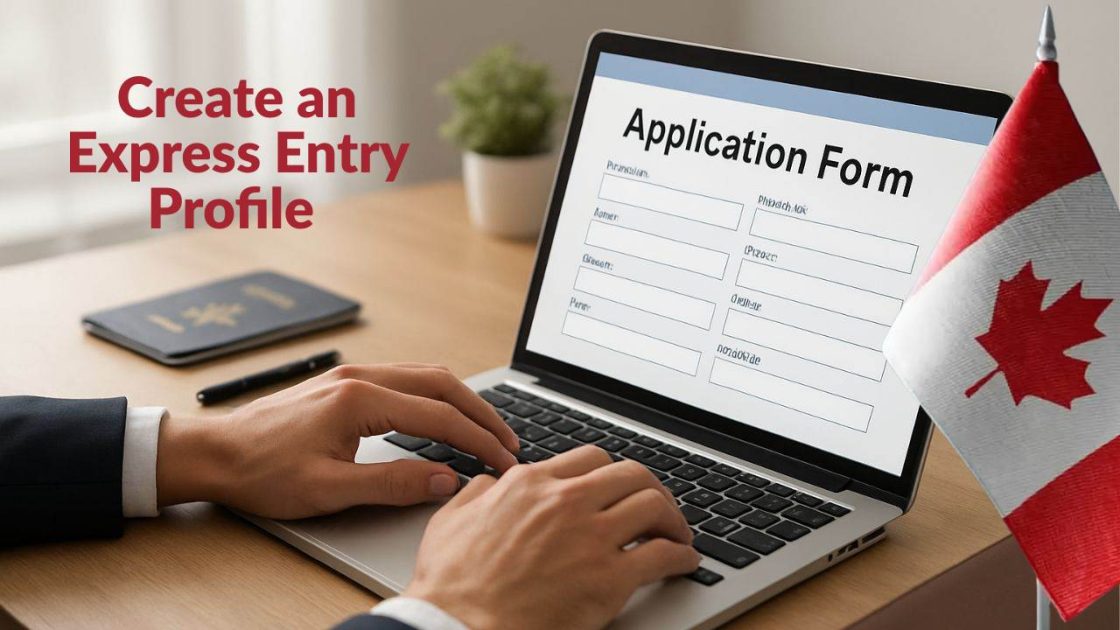
The Express Entry profile collects detailed information across several categories. Accuracy is non-negotiable, every entry must match your passport and supporting documents exactly. Even minor discrepancies can cause delays or complications later.
Once you are satisfied that every section is accurate, submit the profile. You will immediately receive your CRS score and enter the active candidate pool.
Submitting your profile is the beginning, not the end. Here is what follows:
A higher CRS score improves your chances of receiving an ITA in each draw cycle. Here are the most effective strategies:
A carefully prepared Express Entry profile can strengthen your CRS score and reduce delays later in the process. Reviewing your eligibility, documents, language results, and work history early helps you avoid costly mistakes and build a more competitive application from the start.
Yes! The Federal Skilled Worker Program allows eligible applicants without Canadian experience to apply through Express Entry. You must meet minimum requirements for skilled work experience, language ability, and FSWP eligibility points to enter the pool and compete based on your CRS score.
Your Express Entry profile stays active for 12 months after submission. If you do not receive an ITA during that period, you can create a new profile immediately and improve your chances by increasing language scores, work experience, or obtaining a provincial nomination.
Yes! A spouse or common-law partner can affect your CRS score through their education, language results, and work experience. In some cases, choosing the stronger applicant as the principal candidate can improve the overall score and increase invitation chances.
General draws invite the highest-ranking candidates across all Express Entry programs. Targeted draws focus on applicants with specific qualifications, such as healthcare, trades, STEM occupations, French-language ability, or provincial nominations, creating additional opportunities for skilled candidates.
Creating an Express Entry profile is more than simply filling out an online form. Every detail, from language test results and educational assessments to work experience and supporting documents, plays a direct role in determining your CRS score and overall eligibility for permanent residence.
A strong profile begins with proper preparation and accurate information. Understanding how the system works, selecting the correct immigration program, and improving key scoring factors can significantly increase your chances of receiving an Invitation to Apply during future draws.
Whether you are applying from outside Canada or already have Canadian experience, taking a strategic and well-organised approach can make the entire immigration process smoother, faster, and more successful.